


Author: Nancy, PANews
Using his own token as collateral to withdraw nearly half of the liquidity from the protocol he founded, Rune Christensen's move has pushed the established DeFi protocol SKY (formerly MakerDAO) into the center of public scrutiny.
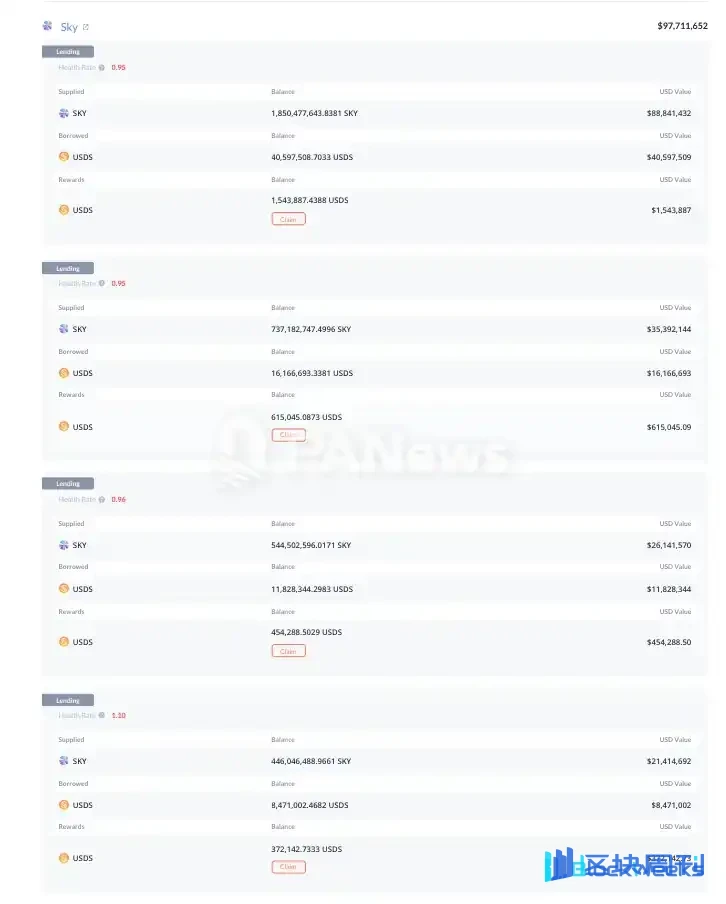
Recently, Rune was revealed to have used SKY tokens worth approximately $185 million as collateral to borrow nearly $77 million in stablecoin USDS from the protocol. This large loan quickly triggered liquidity pressure, causing depositors to temporarily be unable to redeem their funds normally.
At the same time, Rune's game studio Raw Power Games recently declared bankruptcy, further intensifying market speculation that he was using the protocol's liquidity to cash out in a disguised manner.
Rune Withdraws Nearly Half of the Pool's Funds, Depositors' Redemptions Blocked
A few days ago, community user @punkquidity posted that Sky's stUSDS lending pool had had no withdrawable funds for several consecutive days, with liquidity dropping to zero, and even the largest holders were unable to redeem normally.
According to the disclosure, the last freely withdrawable funds were taken out on the evening of November 10. Since then, the yield of stUSDS has continued to climb. A similar situation had previously occurred on October 31, when the lending pool was in a state of zero withdrawable liquidity for most of the time and only recovered that evening.
punkquidity further pointed out that an address associated with Sky co-founder Rune used SKY tokens as collateral to borrow $76.9 million in USDS from the protocol and had not repaid any principal in the past 6 months. This debt accounts for nearly 48% of all funds lent out by stUSDS. Since the loan has no maturity date, not repaying the principal for a long time does not itself violate the protocol's rules.
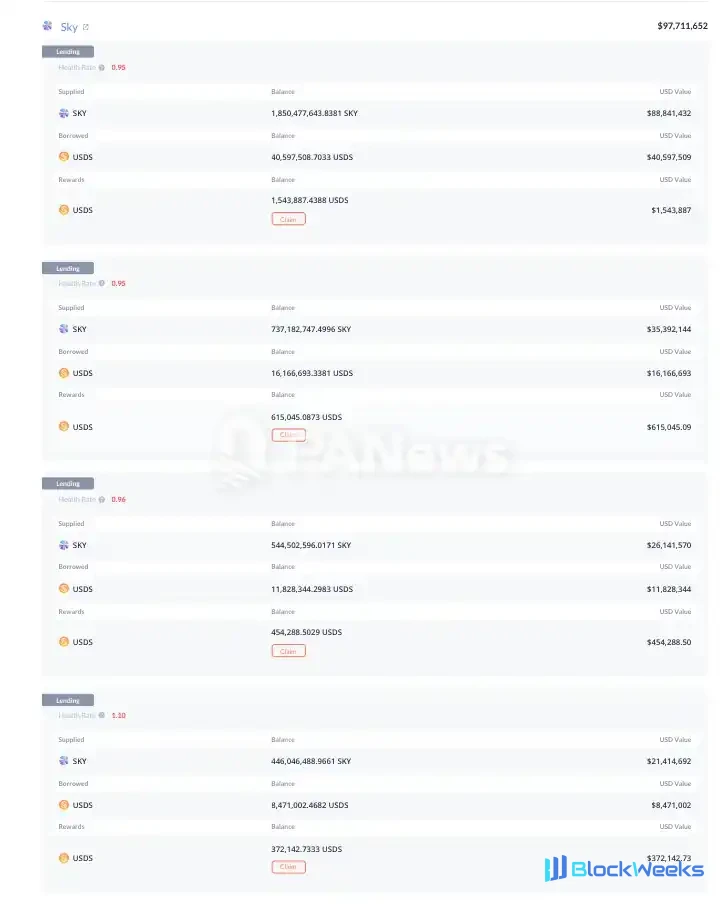
More noteworthy is the liquidation risk faced by the collateral. DeBank data shows that, based on Sky's valuation of the SKY collateral in this loan at no more than $0.025, 3 of the 4 collateral positions in the associated wallet have fallen below the liquidation line, with health rates below 1. However, Sky has currently disabled the liquidation mechanism for all stUSDS borrowers, so forced liquidation will not occur. At the same time, calculated at SKY's current market price (worth approximately $172 million), the wallet's collateral value is still about 2.2 times the debt.
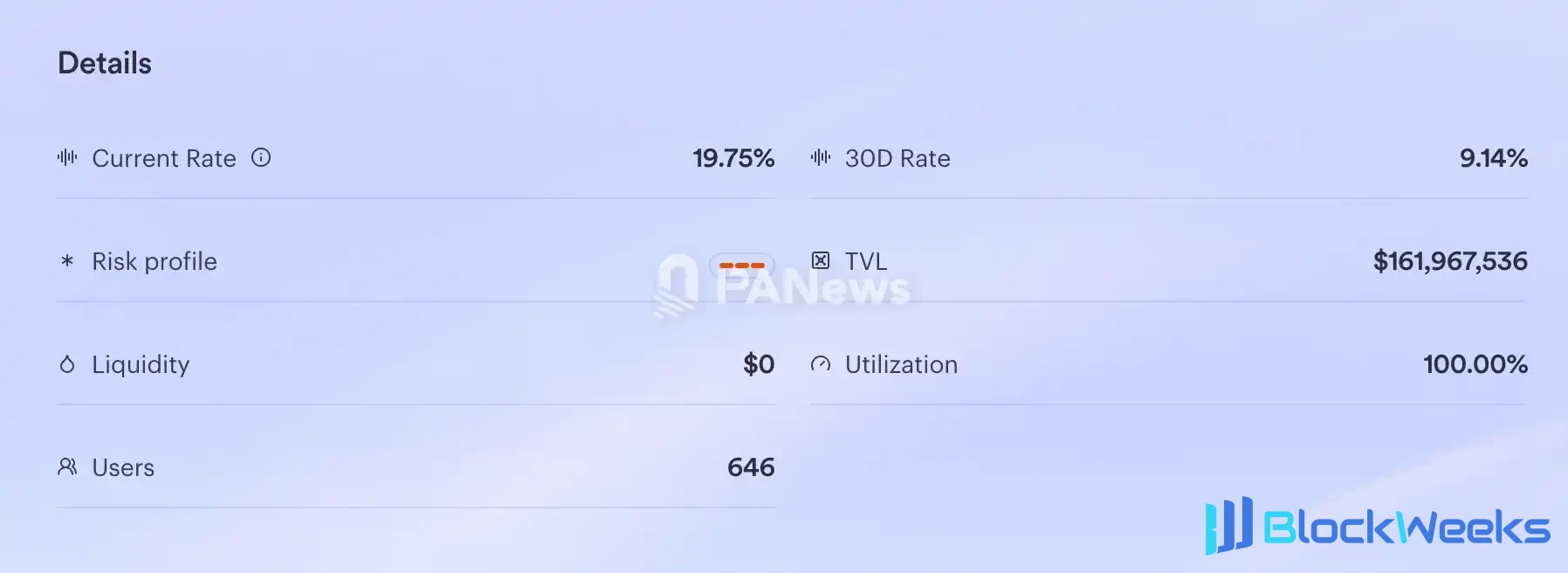
According to data from Sky's official website, as of November 19, the interest rate of the stUSDS lending pool had risen to 19.75%. The pool's total value locked is approximately $162 million, capital utilization has reached 100%, and immediately withdrawable liquidity has dropped to zero. This means depositors are temporarily unable to redeem their funds normally and can only wait for borrowers to repay loans or for new funds to flow in.
Although higher yields can, to some extent, attract new funds to enter and prompt borrowers to repay loans, with Rune's large loan still unpaid and liquidity in the pool continuing to dry up, high yields cannot solve depositors' exit dilemma.
For depositors, the biggest risk right now is not the level of yield, but the lack of assurance of immediate exit for their funds. Whether they can redeem smoothly depends largely on when Rune repays the loan and whether new funds continue to flow into the pool.
Suspected of Disguised Cash-Out, Bankruptcy of His Game Company Fuels Further Speculation
Rune's large loan has also been questioned by the market as a kind of "disguised cash-out."
Unlike directly selling SKY, collateralized borrowing provides Rune with a way to cash out in advance. If he directly sold a large amount of SKY on the market, it could not only impact the token price but also easily trigger community concerns about large holders selling off, team confidence, and even the project's future. Through collateralized borrowing, he can lock SKY into the protocol in exchange for liquid funds without actually selling the tokens he holds.
This means Rune both obtained funds he can freely dispose of and retained ownership of SKY. If the token price rises in the future, he can still enjoy the gains from asset appreciation.
In fact, using one's own token as collateral to borrow stablecoins in order to avoid directly selling tokens has precedents in the DeFi industry. In 2023, Curve Finance founder Michael Egorov pledged large amounts of CRV on multiple lending platforms, with the peak collateral amount once approaching half of the circulating supply at the time, making him a target for short sellers and pushing his positions close to the liquidation line. In the end, Egorov was only able to resolve the liquidation crisis through over-the-counter (OTC) transactions with a "white knight."
More controversially, the SKY protocol's automatic liquidation mechanism is currently disabled. Under normal collateralized lending rules, when collateral prices fall and a position's health rate drops below the liquidation line, the protocol should initiate forced liquidation, promptly dispose of the collateral, and recover the loan to avoid the accumulation of bad debt.
In fact, this liquidation mechanism was not disabled only recently. As early as September 2025, when Sky was preparing to launch stUSDS, it stated that the liquidation function of LSEV2-SKY-A had not yet been enabled, mainly because at that time most MKR had not yet migrated to SKY and market liquidity was insufficient. To reduce market impact and the risk of liquidation mechanism failures, the official team chose not to enable automatic liquidation for the time being; if undercollateralization occurred, it would be handled through manual liquidation by the governance mechanism.
However, this mechanism has also exposed risks under current circumstances. Even though some collateral positions in Rune's associated wallet have fallen below the liquidation line, the protocol cannot promptly recover funds through automatic liquidation. The large loan can continue to exist, while depositors' funds are thus occupied for a long time.
From the community's perspective, the original intent of Sky's design of this mechanism was to encourage SKY holders to conduct collateralized lending within the protocol rather than turning to external lending platforms, thereby enhancing token utility and promoting capital circulation within the ecosystem. But from the current actual situation, Rune's associated wallet has become one of the protocol's large borrowers, occupying a large amount of funds for a long time without repaying principal, and has even become one of the sources of the protocol's liquidity risk.
Meanwhile, the recent bankruptcy news of Rune's game studio Raw Power Games has further intensified market doubts about his borrowing motives.
Raw Power Games was founded around 2020 and initially relied mainly on Rune Christensen's personal funding. The studio team had participated in the development of games such as The Witcher 3, Total War: Three Kingdoms, and Crusader Kings III. Among them, the sandbox strategy game Chronicles: Medieval, as a core project, received considerable market attention and once entered the top 30 on the Steam wishlist.

However, this highly anticipated game ultimately did not make it to official launch. On October 30, Raw Power Games announced that due to uncontrollable factors that caused an interruption in the funding support required for the project, the studio is currently facing the risk of closure, and Chronicles: Medieval may also be unable to continue development. It is currently making every effort to seek new funding support and has begun communicating with potential aid parties. The team cannot yet determine the final fate of the studio and the game, but promises to continue disclosing progress transparently to players.
Recently, Satisfactory developer Coffee Stain announced the acquisition of the IP under Raw Power Games for approximately $5.42 million and took over the development of related projects.
Although there is currently no evidence that Rune used the funds borrowed from the Sky protocol for Raw Power Games, the interruption of funding support for the game studio and the liquidity tightness in Sky's lending pool happened around the same period, which still triggered much market speculation.
It is worth noting that the interest rate of the stUSDS lending pool has been continuously raised recently, which may be intended to attract new capital inflows through high yields in order to alleviate liquidity pressure.
However, given that depositors are still unable to redeem normally and the protocol's liquidation mechanism is also in a closed state, high yields may not be enough to dispel investors' concerns. If the liquidity dilemma cannot be alleviated for a long time, what Sky faces may not only be funding pressure, but also a crisis of market trust.